EDCI 335 Blog Post 3: Inclusion
Inclusion Definition and Implication: Personal Statement
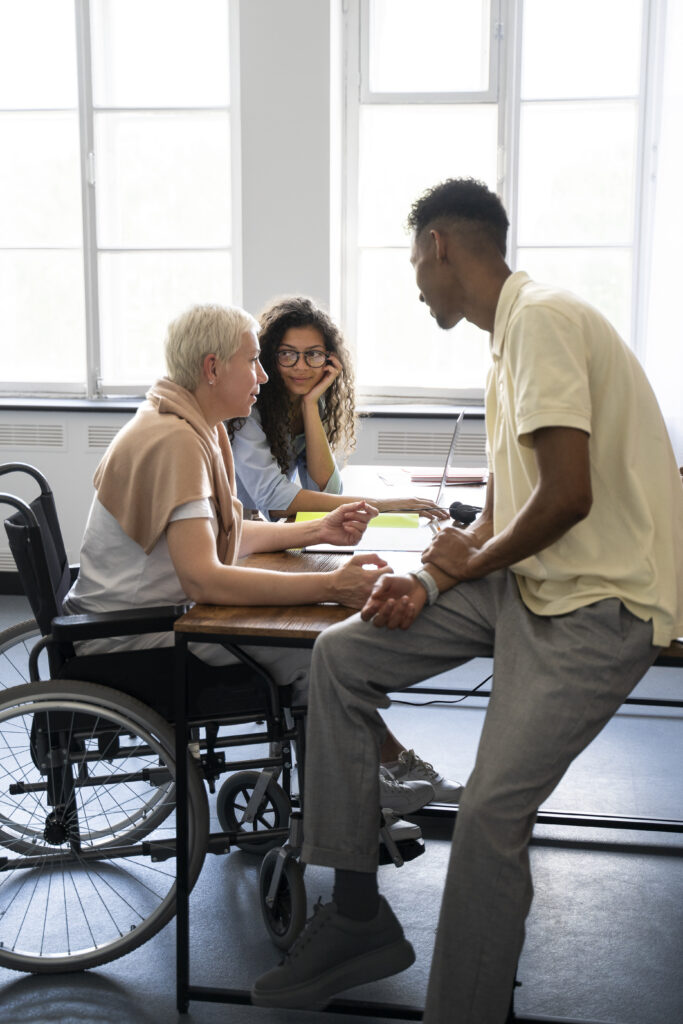
I was an inclusion support worker for UVic camps for a few years, and when I was training people, I would always tell them that the end goal of an inclusion worker is to do such a good job facilitating that your students are indistinguishable from any other student. So I would describe inclusion as facilitating learning so that students with varying capabilities can participate as peers. This is to get away from what school was like when I was growing up where all the students whose needs were deemed to be ‘to much’ would get move to an isolated room to work. I believe this older model had part of the answer in terms that they recognized that the students’ needs were different; however, they did not operate to have these students integrate into everyday class, which, at the end of the day, is the goal of inclusion in education.
In a physical and health education lens, if playing a game such as Monarch of the Court in pickleball you can have simplifications/challenges that make the activity harder for students who are higher skill level or easier for students who need it. An example of this could be changing court sizes depending on who is winning or losing. For example, if Matt wins a point against John, then Matt’s court would get bigger so that Matt has to move more to defend, and John has a bigger target. This leads to a natural evening of play where two students with different skill levels can participate together in a competitive game. This helps the student with the bigger boundaries as they are being challenged, and the student with the smaller boundaries as they are also being challenged. This leads to increased motivation as a student who might believe they are ‘bad’ at a sport is now competitive with someone who they deem is really good. Designing for the margins helps all learners, and the racquet-sport adaptations below show that in action. The same scaffolds that remove barriers for one student also raise the quality of practice for everyone by clarifying goals, creating fair challenges, and keeping all players engaged.
Short List of Possible Simplification / Challenges (Raquet Sports)
- Changing court sizes: Bigger is harder smaller is easier
- Changing target sizes: Smaller is more challenging, bigger is harder
- Adding a self rally: makes it easier as instead of hitting right away someone can hit the ball up in the air before hitting it over the net
- Changing tool: having a bigger vs smaller raquet or using your hand instead of a raquet
- Useing a bigger ball vs smaller ball: Tennis balls can be hard to hit and move very fast so using a smaller ball can make it easier for people to start learning.
Example in my Practice
Above is a lesson plan/task progression for a pickleball class I taught at Rockheights Middle School. It was our last class, and throughout the class, the students’ abilities really evened out, which allowed us to have a less drastic simplification. (Changing court size is more drastic as it gives a larger advantage to the other players.) In this example ,our simplification was to incorporate a self rally. This meant that students could choose whether or not to use it. Most students did not use it; however, some did, and they saw great success within the activity. Students who used the modification were able to compete with students whom they usually wouldn’t be able to. There was one student in particular who was super unengaged in our first lesson, but by the last one, they were one of the most engaged and into it, as she was able to learn through the utilization of different modifications.
UDL Pricipals Applied
| UDL Principle | Definition from Paper | Connection to my Experience |
|---|---|---|
| Multiple Means of Representation | Addresses WHAT students learn through offering information in multiple ways (visual, verbal, physical, etc.) | Talk about how you make instructions, rules, or In the above lesson play I follow a play practice play modal. In the practice section students are instructed on how to serve (verbal) and then a demonstration is done by a studant (visual) and then when they go and practice they are given task cards which is an addition verbal element. This is important as students are able to absorb and connect to the information is a variety of ways which makes it more inclusionary for all learners |
| Multiple Means of Action and Expression | Addresses HOW students learn from offering multiple ways for students to demonstrate what they know. | This feeds into the game modifications I outline above where students are able to demonstrate their abilities in multiple ways through simplification or challenges. This is also demonstrated in the task cards as students can show their knowledge through the way the coach their peers. For example a student may not be able to perform a perfect serve but do they understand the ques to help a classmate |
| Multiple Means of Engagement | Addresses WHY students learn through creating motivation and engagement through choice, challenge, and relevance. | Through the simplifications and challenges, student engagement and through so the inclusion element is focused on when you over simplificaitons so that students who normally would not be in a competitive match now are. Through the play practice play model, the relevance of the material is always present, as after the first play, students are thinking about things they could improve, and then in the practice, they are given the opportunity, and then when they go back to play, they can immediately see why the practice was relevant, as the result is present |
Importance of Inclusion in UDL
Framing inclusion through UDL directly supports motivation, persistence, and learner agency because when students see real ways to access content and show what they know, the work feels doable and worthwhile, which boosts their willingness to stick with challenges and make choices about how they learn. Over time, those choices help students act more independently and take ownership of their progress.
Synchronous and Asynchronous Learning
While Synchronous learning occurs in real time and builds immediacy and community, Asynchronous learning occurs on the learner’s schedule and aims to supports pacing and reflection. EDUCAUSE describes blending both modes as “bichronous online learning,” where learners do anytime, anywhere work asynchronously and then join real-time activities for the synchronous sessions (Martin, Polly, & Ritzhaupt, 2020). Live sessions help surface misconceptions quickly and strengthen connection because students are able to ask questions as they arise. Asynchronous activities reduce scheduling barriers and allow deeper processing because students are able to plan their own schedules and take time to digest and incorparate ideas. Thus, aplanned blend creates inclusion through both connection and flexibility as students are able to utilize the benefits form in person setions and communication while utilizing the flexability and oppoutounity of in depth learning presented through Asynchronous learning. Research on bichronous design finds that intentionally mixing synchronous and asynchronous elements can improve engagement when the blend fits the course goals and activities (Martin, Kumar, Ritzhaupt, & Polly, 2024). This could be done by combineing scheduled live touchpoints such as Q and A, coaching, and discussions with structured asynchronous work such as chunked media, guided forums, peer review, and self checks while providing recordings, summaries, or alternate pathways for those who cannot attend live.
Principles of Effective Online Education
While effective online education is often described as a list of tools, it is better understood as an intentional ecosystem where goals, activities, assessments, and interactions all point in the same direction. Clear outcomes tell learners what success looks like, aligned activities show them how to get there, and aligned assessments let them demonstrate growth in meaningful ways. This is critical because clarity lowers uncertainty and cognitive load, which helps students focus on learning instead of guessing what you want. It also builds trust. When learners can see why each task exists and how it connects to the bigger picture, they lean in.
A practical way to build this ecosystem is to start with outcomes, then map each assignment and resource to those outcomes so the purpose is obvious. Keep materials accessible with readable documents, alt text for images, captions for video, and consistent page layouts. ERT, by contrast, is a “temporary shift… due to crisis circumstances,” underscoring why intentional design and accessibility matter in planned online learning (Hodges, Moore, Lockee, Trust, & Bond, 2020). Establish a steady weekly rhythm with brief overviews, small checkpoints, and predictable feedback windows so students can plan their time. Add regular instructor touchpoints like announcements, quick video notes, and office hours to keep momentum. Put simply, design on purpose, make the path visible, and keep the cadence steady so every learner knows what to do, why it matters, and how to succeed.
Interaction and Presence
| Interaction type | Purpose | Importance | Example Tactics | Example Tools | Presense | Common Issues |
|---|---|---|---|---|---|---|
| Student to content | Build understanding and skill | Learners need clear, chunked inputs to make sense of new ideas | Short videos or readings, guiding questions, low-stakes quizzes, quick reflections, authentic mini tasks | Weekly modules with 5-10 min chunks; LMS pages, embedded quizzes, docs, slides, short video clips | Clear learning goals on each page, visible progress checks, immediate quiz feedback | Long lectures, walls of text, unclear outcomes, no practice before grades |
| Student to student | Create belonging and accountability | Peers motivate, model thinking, and reduce isolation | Structured discussions, peer review with rubrics, small group projects, think-pair-share in forums, collaborative docs | Predictable discussion windows and group checkpoints, forum tools, Google Docs, breakout rooms | Warm prompts, visible norms and roles, summaries of group insights, shout outs for good contributions | Vague prompts, uneven workload, ghost groups, reply-only threads with no synthesis |
| Student to instructor | Provide direction, feedback, and momentum | Instructor presence anchors the course and keeps learners on track | Weekly roadmap posts, timely feedback, quick video or audio notes, live Q and A, office hours | Weekly announcements, 48-72 hr feedback targets, brief live touchpoints recorded for later | Friendly tone, consistent check-ins, clear next steps, rapid answers to common questions | Silent weeks, late feedback, unclear grading, live sessions with no alternatives |
References
CAST. (2018). Universal Design for Learning (UDL) Guidelines: Version 2.2. CAST. https://udlguidelines.cast.org/static/udlg2.2-text-a11y.pdf
CAST. (2024). Universal Design for Learning Guidelines version 3.0. https://udlguidelines.cast.org
Hodges, C., Moore, S., Lockee, B., Trust, T., & Bond, A. (2020, March 27). The difference between emergency remote teaching and online learning. EDUCAUSE Review. https://er.educause.edu/articles/2020/3/the-difference-between-emergency-remote-teaching-and-online-learning
Martin, F., Kumar, S., Ritzhaupt, A., & Polly, D. (2024). Bichronous online learning: Perspectives, best practices, benefits, and challenges from award-winning online instructors. Online Learning, 28(2), 1–27. https://doi.org/10.24059/olj.v28i2.3945
Martin, F., Polly, D., & Ritzhaupt, A. (2020, September 8). Bichronous online learning: Blending asynchronous and synchronous online learning. EDUCAUSE Review. https://er.educause.edu/articles/2020/9/bichronous-online-learning-blending-asynchronous-and-synchronous-online-learning
Peter, S. H., & Clement, K. A. (2020). One step at a time: A case study of incorporating Universal Design for Learning in library instruction. Scholarship of Teaching and Learning, Innovative Pedagogy, 2(1), Article 3. https://digitalcommons.humboldt.edu/sotl_ip/vol2/iss1/3
Pictures
Featured Image: Image by atlascompany on Freepik