
Blog Post #2 Module 2’s Use in PHE
Backward Design & UbD
Starting with the end in mind is incredibly valuable to benefit students’ learning outcomes. An example of this in PHE is with learning to serve in pickle ball. If you start with the end goal of students being able to serve you can think of what evidence would show this. For pickleball we use the following ques.
| SKILL PHASES | DRIVES / rally | SERVE / start point | VOLLEY / play net |
| RECOVERY & preparation In an athletic ready position, facing the opponent .Footwork back to a home base | Return to the base position behind base-line, before the ball bounces on the other side of the court.Staying low look to move forward, as you cover the opponent’s target area.Balance on balls of feet, stopping motion before swing. Stop, set, swing. | Select a target. Decide where you will go after you serve based on the target. Make sure behind back line when serve | Small steps, stay low. Base square to kitchen line to reduce opponent target area Return to base before the ball bounces on the other side |
| IMPACT POINT Centre of strings. Ball comfortable distance from body | • In the centre of paddle • At waist height • Slightly out and in front of the body • At a comfortable distance from the body | In the centre of the bat Extended arm Slightly out and in front of the body Waist height | Set-up square to court.Prepare the bat just behind the impact point by making a slight shoulder turn. Prepare before the on-coming ball cross’s net. Reach forward with flat bat face |
| GRIP (Basic) Grip changes as the player develops.Eastern WesternContinental | See video – Can use Continental (starter grip), Eastern or Western.Continental (top/side bevel) | Grip depends on how you play – Eastern, Western, Continental – (See explanation) | Continental grip Allows a stable & open racquet face at contact.Good for body shots. Hold in frontDrive volley see drives |
| SET-UP for stroke Arm and body move as one unit (unit turn) before the ball enters the court on the player’s side. | Get sideways by preparing foot, body & racquet (Unit Turn) Keep low, move to the proper location with balance. Before the coming ball bouncesStroke comes from the legs, with arm and bat adding to leg shift. | Start front facing or side-on to back line.Step or from sideways transfer weight from back foot to front as rock forward.Hold the ball with your non-bat hand in front. Drop ball from hand as bat swings. Wrist keeps the bat side parallel to the ground. | Create and maintain a ‘catching’ action to ensure the bat faces the target before and after hitting the ball.Keep a stable bat face- CATCH & STAB Step out on side of ball, then reach, stay square. Half swing for turn, reach and push through the ball, weight on bat side foot. |
| HITTING ZONE Strings move with stability to the intended target. Laid back wrist | Extend’ the bat face towards the target as long as possible Maintain a stable & laid-back wrist at the contact | Swing the bat face up at the ball and towards the target Hit ball extending through target areaMake perpendicular contact with the bat face to the ball as strike through | In the centre of the bat At chest height Slightly out and in front of the bodyAt a comfortable distance from the body High and time, swing through ballLow, stab, angle ball away from opponent, keep low |
Once you have the learning objectives and cues it makes it accessible to craft play and practice that emphasize these ques. Below is an example of a lesson plan I created and taught in Rockheights last spring. (the outline was for my use only and so its very point form and language may not be easily understood)
| Task | Skill or Strategy focus | TASK/GAME instructions or tactical question | Achievable goal of task or game to move on to next task/game | Cues or refinements for skill or strategy | Extensions/SimplificationsS.T.E.P. |
| Consistency in reading and recovering after each throw | Equipment: 2v2 game with 1 ball, 4 cornersUse 4 corners to make a grid, have a duo one on each side of the halfway lineToss the ball 4 times (4 rallies) before the point starts, try to throw it where the opponent’s team can’t catch it or if it goes out of boundsTry to read and react to where the ball is going after each toss | 4 consecutive rallies to start the point while working on recovering and staying low first team to get 6 points and sit down wins | – Set up before the next reception – Step through on toss while staying low | Adaptations: expand or shrink the court to allow for more or less space and timeif team is winning they can only throw and catch with one hand | |
| Serve consistently to a target using proper form and set up | 1 ball,1 racquet, 1 task card, 1 target on the wall Groups of 3, 1 person coaches, 1 person serves, 1 person retrievesserve consistently to your target while one member of your group helps coach you on what you need to work on with task card to guide | Goal of the task: to serve consistently over the net and into a zone while getting feedback from your partners Switch after time ends | Set up: Start front-facing or side-on to the back line.Step or from sideways transfer weight from the back foot to the front as rock forward.Impact point:- extended armwaist height slightly out and in front of the body | Adaptations:Shorten the court to make it easier for server or move the serving line up if it’s too hard to get it into the back court or over the net | |
| Serving consistently into the zones (hula hoops) | Equipment: 1 racquet and ball per person, 6 hula hoops per courtSplit into 3 teams of 5-7 try to serve into hoops as they count for pointsOnce hula hoop has been scored on, take it back to your teamteam with most points at the end wins | Serve consistently into zones for points Try and get as many points as you can before time runs out | Start front-facing or side-on to the back line.Step or from sideways transfer weight from back foot to front as rock forward.In the center of the bat Extended arm Slightly out and in front of the body Waist height | Adaptations: Shorten serve court to lower the required force of the serveOr make points zone bigger Make zone smaller for harder serving zone to hit thus allowing for more time to hit |
I found that crafting this lesson plan through utilizing backwards design helped create better outcomes, specifically because of the application of the adaptations. I found that when I started with the goal in mind and then thought about how to demonstrate that said skill, it became apparent that different students will have different levels of skill when playing/practicing these games. This helped me craft adaptations naturally into the games to even the playing field and make it competitive through supporting individuals learning at any level of play. One I found the most successful was that after a team won a game of 4 corners, they had to play with one hand. This resulted in the first game sometimes being a decisive win for one team, but the second game being really close. This led to students who may have been disconnected instead being really engaged in play because they were being competitive with someone they previously thought would be impossible
Learning Outcomes & Bloom’s / SOLO Taxonomies
Comparison
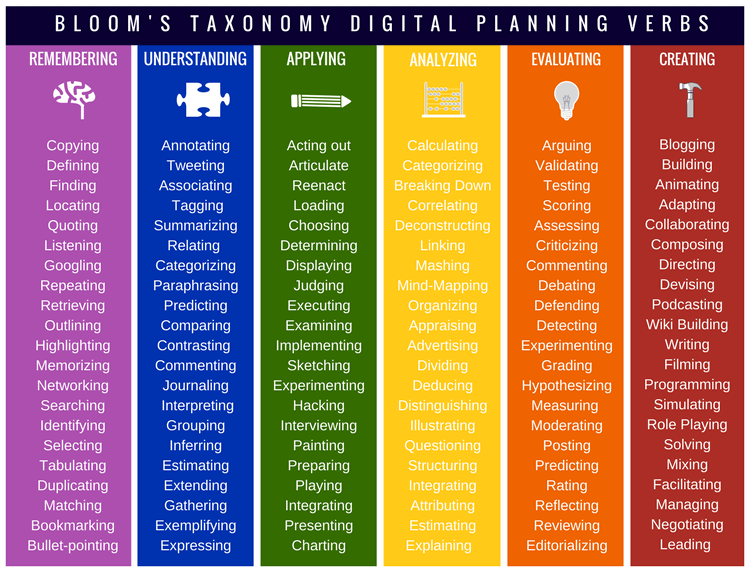
When I think about Bloom’s and SOLO, I see them as two parts of the same process. For me, Blooms is something I would think back on during everylesson plan to craft learning outcomes, because it helps craft specific, actionable objectives that help me plan my lesson plans. Through the us of words like analyze, create, demonstrate it makes it easier to write objectives that are measurable and concrete instead of vague. For example, in PHE I might say, “Students will analyze how different team roles affect performance” instead something like “Students will understand how teamwork benefits them.” Using Bloom’s sets the stage for something deeper. That’s where SOLO comes in. SOLO is less about the verbs on a page and more about how far a student’s understanding has actually gone. It helps us see the difference between surface level tasks, like listing rules, and deeper tasks, like connecting those rules to overall strategy. In a Social Studies class, Bloom’s guides would help me to set a learning outcome like evaluate the impact of early 1700’s treaties on Indigenous–colonial relations. This is where SOLO would step in and help me notice whether a student is just repeating facts or linking those facts to broader shifts within Indigenous–colonial relations.
Using Bloom’s and SOLO together benefits student learning because they give the instructor both structure and insight. Bloom’s helps set clear, measurable objectives, while SOLO shows the depth of students’ responses. Using the example above, if students meet an objective but frame Indigenous perspectives as one-size-fits-all rather than recognizing the diversity that existed, SOLO helps highlight that this is still surface-level thinking. This creates an opportunity for the instructor to refine the learning objectives using Bloom’s and guide students toward deeper analysis. In this way, SOLO helps teachers see where learning is shallow, and Bloom’s offers the language to adjust outcomes, which ultimately leads to more accurate and meaningful learning.
Motivation and Learning by Doing:
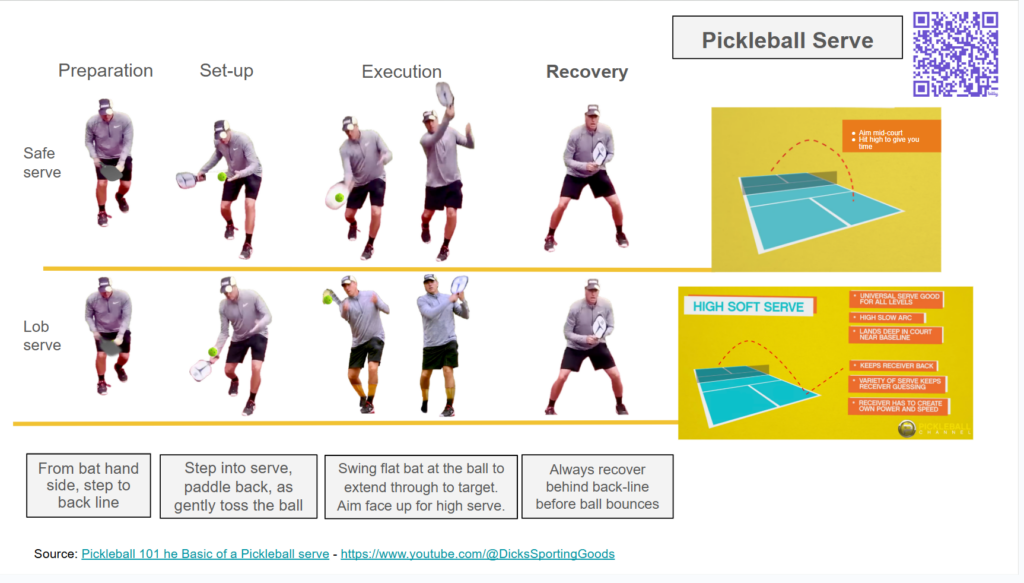
In my EPHE 437 (Net Games) we are instructed using a play-practice-play approach and then we go into classrooms and use that approach to help instruct students. In my experience this approach is great because the initial play us and get us right into playing under restraights. This could look like serving and playing a point with a partner. The instructor every 3-5 minutes will stop us and point out a few ques using a student as an example well return to play and switch partners. After this we go into the practice period. This is where we get into our teams and we are given task cards. This is where we help teach our classmates. For serving it would go through the four steps of the serve and we would go through it with our partners giving feedback and then we would switch. During this section the instructer would walk around giving feedback to the students who are teaching giving them hints for what to talk about or how to phrase things. After this we would return to play and demonstrate the new skills we had learnt in game.
Attention: The rapid cycle of short play, quick cue, back to play keeps cognitive participation high. Role switching and peer coaching demand active attendance, so attention is driven by responsibility to a peer, instead of passively listening to a coach.
Relevance: Every cue is immediately stress-tested in live play, this makes the “why this matters” self evident making it easy for students to connect the action to the application. You also transfer the same routine into real classrooms, which signals utility beyond the gym. (See section 1 document “Skill Fundamentals” for examples of ques.
Confidence: Task cards narrow focus to one actionable cue at a time, creating achievable wins. Peer feedback plus instructor feedback on how to phrase feedback helps students giving the feedback but also the one performing the action as now their peer has the tools to help.
Satisfaction: Learners see payoff within the same session as it is easy to compare the first session of play to the second and they’ll be primed for this reflection through my practice section that separates the two.
Task Card Example
Inquiry & Project-Based Learning
Inquiry and project-based learning are great tools when used correctly, but when used by themselves, they are not sufficient in creating great learning outcomes. Inquiry focuses on the queing students with a broad, deep, or overarching question that serves as a guide or reflection point while working through content. An example of this could be “How do historic treaties shape today’s treaty processes in our local community?” As students go through the material, the instructor could use these questions to tie back multiple concepts or ideas. The use of inquiry-based learning is not bad at all; however, if inquiry questions take the place of properly crafted learning objectives, then learning can become too broad and not focused on the curriculum. Inquiry questions should be used to inspire and motivate students towards deepening concepts, thinking, and connections, but they shouldn’t take the place of day-to-day learning outcomes.
Project-based learning shares a similar sentiment. Projects are a great opportunity for students to learn how to research and craft connections, along with teamwork and collaboration skills. From personal experience, some teachers have a tendency to use projects to not have to teach. One bad example was a class I had in high school where the whole class was 3 group projects. There were no lectures, no teaching, just free periods to work on said projects. This is the worst end of project-based learning, but it highlights what you need to make it work, guidance. When a student works on a project, it is a unique opportunity for them to explore what they are interested in, but instructors need to do a good job of providing resources, guiding them and helping create a project that balances curriculum and personal inquiry. Hmelo-Silver, Duncan, and Chinn (2007, p. 101) argue that inquiry-based learning inherently has to be highly scaffolded to reduce the cognitive load on the students and promote greater learning outcomes. They don’t propose any specific framework, but what seems to be a trend for what counts as “scaffolding” ties back to Bloom’s taxonomy and proper learning objectives as a primary starting point, participating in different, more compact learning activities and then going into a PBL or inquiry learning. I believe this makes a lot of sense, and the precursor tasks and information help the student feel confident and can use it as a jumping-off point into more complex inquiry-based learning and projects.
“To begin with the end in mind means to start with a clear understanding of your destination… so that the steps you take are always in the right direction.” — Stephen R. Covey
Reference
Hmelo-Silver, C. E., Duncan, R. G., & Chinn, C. A. (2007). Scaffolding and achievement in problem-based and inquiry learning: A response to Kirschner, Sweller, and Clark (2006). Educational Psychologist, 42(2), 99–107. https://doi.org/10.1080/00461520701263368